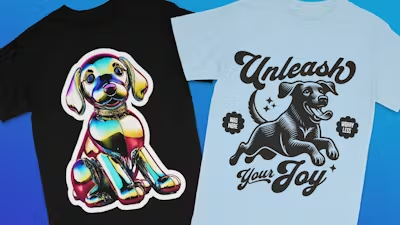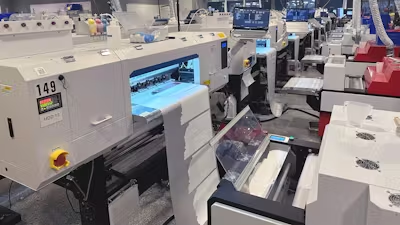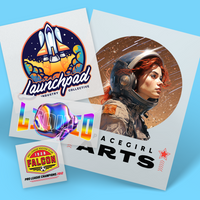
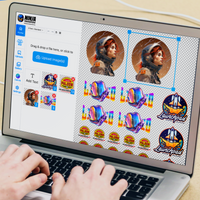
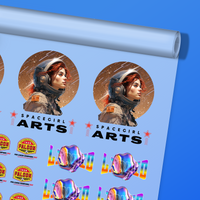
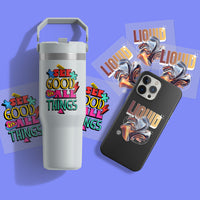
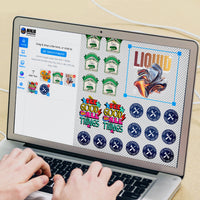
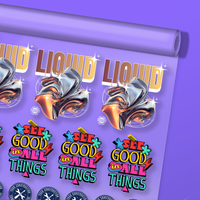







Are you ready to make your mark in the t-shirt business? In today's digital age, where anyone can set up an online store and start selling custom designs, understanding the complexities of intellectual property has never been more important—or more challenging. Whether you're just starting out or looking to expand your existing line, knowing about copyright law is crucial to your success.
The rise of affordable printing technologies like DTF (direct-to-film) transfers has made it easier than ever to bring your creative visions to life. But with this accessibility comes responsibility. Copyrights can be confusing for the average person, and the consequences of infringement can be severe.
In this guide, we break down the essentials of copyright law as it applies to t-shirt design, with practical guidance on what's allowed, what's not, and the gray area in between. You'll learn how to evaluate your designs, avoid common pitfalls, and leverage resources like public domain images and Creative Commons licenses—plus the emerging challenges posed by AI-generated designs.
|
Disclaimer: This article is for educational purposes only and should not be construed as legal advice. We're not lawyers, just passionate t-shirt enthusiasts who want to help you avoid common mistakes. If you have specific legal concerns, it's always best to consult with a qualified attorney. |
Table of Contents
- Do you need to worry about copyright? (The short answers)
- Copyright law basics
- Copyright and t-shirt design
- Common copyright violations in custom apparel
- AI-generated designs and copyright law
- How to evaluate your designs: 4 main categories
- How to avoid copyright violations
- Conclusion

Do you need to worry about copyright? (The short answers)
When you should worry
Yes, you should worry about copyright if you're selling t-shirts, printing t-shirts for a client, producing a batch of shirts, or using known characters, logos, or brands in your designs. For example: selling shirts featuring popular superhero characters, sports team logos, or reproducing a famous album cover for a customer.
When you probably don’t need to worry much
You probably don't need to worry much if you're not selling, not printing for a client, only printing a small quantity for personal use, or you’re using your own original artwork with no recognizable protected IP.
The gray area (where most mistakes happen)
However, there's a vast gray area—using known artwork with small changes, printing limited quantities, non-commercial use, fan art, mashups, and AI-generated art. These often get lumped under “fair use,” and that’s where things get tricky.
Important note for print businesses
Most print companies, including Ninja Transfers, will not print obvious copyrighted material. If you submit it, it may be rejected or flagged. But if you're printing at home, you don’t have that safety net—so the responsibility is yours.
Copyright law basics
Before we get into t-shirt specifics, it helps to understand how copyright works in principle versus practice. This foundation makes the “gray areas” easier to spot.
What is copyright?
Copyright is a form of intellectual property protection granted by law to creators of original works—literary, musical, artistic, and more. In simple terms, it gives the creator exclusive rights to use, reproduce, distribute, perform, and display their work.
Copyright supports the creative economy: it helps creators benefit from their work, encourages new creation, and sets rules for how creative works can be used.

How does copyright work?
Copyright protection is generally automatic. As soon as an original work is created and “fixed” in a tangible form (saved, printed, posted, recorded), it’s protected—registered or not.
Copyright duration is long. In the U.S., it’s typically the life of the creator plus 70 years. For “works for hire” (created by companies), it’s often 95 years from publication or 120 years from creation (whichever is shorter).
Many large brands have teams dedicated to protecting their intellectual property—and they actively enforce it.
What is fair use?
Fair use is a legal doctrine that allows limited use of copyrighted material without permission in certain cases. In design, it may apply to parody, education, commentary, or transformative works that add new meaning or message.
Fair use is complex and subjective. What one person considers fair use, a court might consider infringement. Example: a small run of Disney-themed shirts for a family trip may feel harmless, but it can still infringe.
How is copyright enforced?
Enforcement is often selective. Rights holders usually focus on cases involving profit, scale, or brand harm. Most enforcement begins with a cease-and-desist letter; lawsuits come later if behavior continues.
The takeaway: don’t try to “fly under the radar.” The simplest strategy is creating completely original artwork.
Copyright and t-shirt design
Now let’s apply those concepts to apparel printing and DTF transfer printing. This is where creators and small businesses most often get tripped up.
The modern marketplace
The t-shirt business has exploded thanks to print-on-demand and easy e-commerce. Anyone can launch a shop, and the sheer volume of designs makes both originality and copyright compliance more important than ever.
DTF transfers also lowered the barrier to entry, enabling high-quality full-color production at home, across many fabric types. That’s great for creators—but it also increases the chances of accidental infringement.
In a crowded market, original design isn’t just safer—it’s a competitive advantage. If you can brand your business as original, you’ll stand out.
Popular designs are almost always protected
It’s tempting to sell designs featuring characters, brands, or teams with huge fan bases. That’s also exactly why copyright exists: to prevent others from profiting from someone else’s creative work or brand identity.
There are safer ways to reference culture without copying it—parody and transformative work can help—but those lines aren’t always clear.
What is transformative artwork?
Transformative artwork adds new expression, meaning, or message to the original. In some cases, that can support a fair use argument. For t-shirt designers, that could mean parody, mashups, or recontextualizing familiar ideas into something distinctly new.
Important: “transformative” is not a magic shield. Only a court can decide fair use. When in doubt, originality is the safest path.
Common copyright violations in custom apparel
Here are some of the most common infringement categories we see in custom apparel. If you recognize your idea in this list, pause and rethink.
Pop culture characters and artwork
Movies, TV, games, comics, and anime are frequent sources of infringement—Disney, Marvel, Star Wars, Harry Potter, and more. Even if you draw it yourself, recognizable characters are still protected IP.
Sports teams
Team logos, mascots, and trademarked phrases are heavily protected. Even “just the name” can be protected in certain contexts. Don’t assume sports-themed = safe.
Bands and music artists
Band logos, album art, and “bootleg-style” merch designs are common violations. Artist likeness and photos can also create legal exposure.
Known brands
Logos, patterns, fonts, mascots, and slogans from major brands are frequently enforced—especially when the design looks “official.”
Famous t-shirt designs
Copying trending shirt designs, viral graphics, or popular store designs can be infringement too—even if you “changed a few things.”

AI-generated designs and copyright law
AI image tools (like DALL·E, Midjourney, and Stable Diffusion) make it easy to generate high-quality art—but they add new legal risk.
Why AI makes this harder
- Ease of creation: designs can be generated in seconds, increasing temptation to use them “as-is.”
- Unclear ownership: the copyright status of AI-generated images is still evolving and can vary by jurisdiction.
- Unintended infringement: AI outputs can resemble existing IP because models are trained on large image datasets.
How to reduce risk with AI designs
- Use AI as an assistant, not a replacement: let it inspire concepts, then build original work from there.
- Avoid prompting recognizable IP: characters, logos, teams, brands, and famous styles increase risk.
- Review and modify: if it looks too close to existing IP, start over or redesign.
- Read the tool’s terms: some tools include licensing limits or commercial restrictions.
- When in doubt, go original: originality is still the safest strategy.
How to evaluate your designs: 4 main categories
Use this simple framework to pressure-test your design before you print. We’ll use a “Mario-like” example to make it concrete.
1) Blatant violation
Direct copies of protected characters, logos, or designs—or anything that looks like official merchandise.
Example: Mario & Luigi in classic poses with “Super Mario Bros.” branding.
2) Questionable
A big departure from the original, but still full of recognizable signals that an average person would associate with the IP.
Example: a stylized cartoon plumber with a red hat and mustache jumping over pipe-like shapes.
3) Fair use (possible, not guaranteed)
Parody or truly transformative work that creates a new message and can’t be confused with the original.
Example: a parody concept with original messaging and heavy transformation (not “just Mario, but different”).
Reminder: fair use is a legal defense—not a permission slip. Only a court can confirm it.
4) Personal use
Many people assume “personal use” is automatically safe. It may reduce enforcement risk, but it can still be technically infringing. If you want peace of mind, keep it original.

How to avoid copyright violations
Here are reliable ways to design safely—without killing your creativity.
Create original artwork
The best protection is making your own work. It’s legally safer and helps your brand stand out.
- Develop your own characters, logos, and concepts
- Use inspiration as a starting point—not a blueprint
- Combine ideas in new ways that are distinctly yours
Use royalty-free clip art and stock (correctly)
Stock libraries can be helpful, but licenses matter.
- Use reputable sources and keep proof of licensing
- Read the commercial-use terms carefully
- Don’t assume “royalty-free” means “free”
Leverage Creative Commons (with the right license)
Creative Commons can be great—if you choose licenses that allow commercial use and follow the rules.
- CC BY: credit required
- CC BY-SA: credit + share under same license
- CC BY-ND: credit + no modifications
- CC BY-NC: non-commercial (not suitable for selling shirts)
Use public domain images
Public domain resources can be great for vintage art, historical imagery, and classic illustrations. Always double-check the status, because rules vary by country and by specific work.
Helpful sources include Wikimedia Commons and Public Domain Review.
Avoiding copyright trouble isn’t just legal protection—it’s also how you build a brand people trust. Originality takes more effort, but it pays off.

Embrace originality: your path to creative (and legal) success
With the knowledge from this guide, you're equipped to create designs that are more original and more legally resilient. Be cautious with known IP, respect the gray areas, and prioritize creativity you can truly own.
When you're ready to bring your designs to life, Ninja Transfers can help with high-quality custom DTF transfers. For the perfect canvas, check out Ninja Blanks. Originality is your superpower—use it.